Building the future of energy together!
Group Energy Corp is a global leading oil and gas company, dedicated to providing reliable and affordable energy to communities around the world. With a focus on exploration, production, and refining of oil and natural gas, we're committed to delivering the energy people need to power their lives.
Our team of experts is constantly exploring new technologies and techniques to make oil production more efficient, safe, and sustainable. We understand the importance of finding a balance between economic growth and environmental responsibility, and work tirelessly to minimize our impact on the planet.
Oil is also referred to as crude oil or petroleum, while natural gas is more accurately described as fossil gas or methane. Oil and gas, as well as coal, are fossil fuels because they are formed underground over millions of years from the remains of plants and animals. Both are made up of hydrocarbons, molecules of carbon and hydrogen.
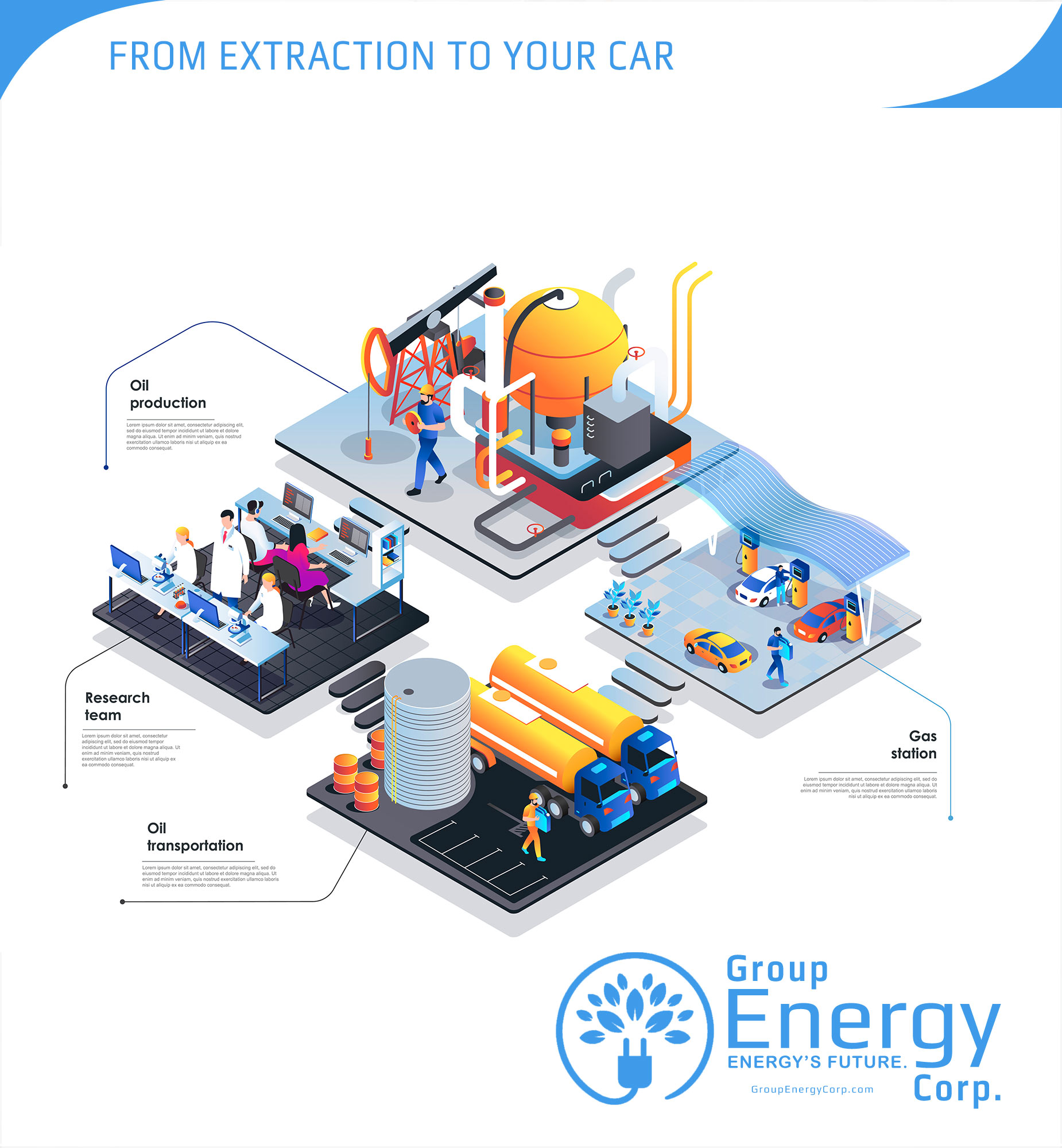
After extraction, oil and gas are further processed before being sold to customers. Oil is refined into gasoline and diesel for vehicles, jet fuel, and petrochemicals, which are used for manufacturing a range of products including plastics and fertilizers. Natural gas is processed to remove petrochemicals and impurities, and the resulting “dry” gas is shipped via pipelines or cooled to form liquefied natural gas (LNG), which can be transported by ocean-going tankers. Gas is used mainly for electricity, heat, and industrial production.
Petroileum Uses
Transportation: Oil is the primary fuel for automobiles, trucks, airplanes, and ships.
Energy generation: Oil is used to generate electricity in power plants.
Heating: Oil is used as a source of heating for homes, buildings, and industrial processes.
Manufacturing: Oil is used as a raw material for the production of various products, including plastics, synthetic fibers, and chemicals.
Agriculture: Oil is used to fuel tractors and other farm machinery, as well as to produce fertilizers.
Lubricants: Oil is used as a lubricant for machinery, engines, and gears.
Chemicals: Oil is used as a raw material for the production of various chemicals, including solvents, detergents, and plastics.
Upsides of Oil
1
Energy density
Oil has a high energy density, which means it can store a large amount of energy in a small space, making it an ideal fuel for transportation.
2
Versatility
Oil can be used for a variety of purposes, such as heating, electricity generation, and fuel for transportation.
3
Abundance
Oil is widely available and is found in many parts of the world, making it a reliable source of energy.